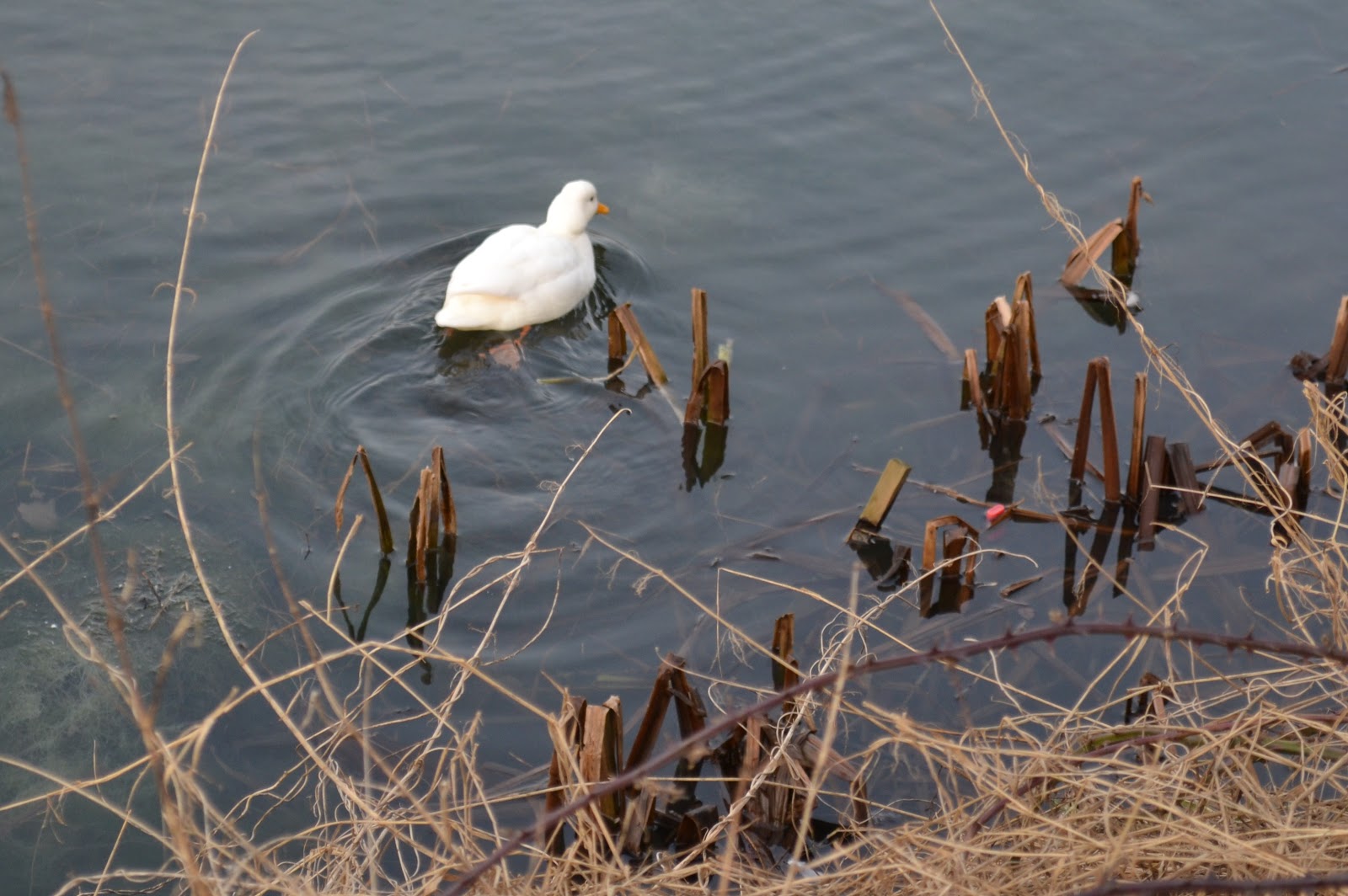
The Coombe Hill Canal in Gloucestershire is unique. It has not attracted the attentions of a preservation society. Canal preservation is now big business, attracting regional development grants, and significant expenditure by local councils. Whether the cost is justified is debateable, but it’s easy to oversimplify the issue. The long term benefits of canal restoration are impossible to quantify, and enthusiasts would point to the many hours spent by volunteers in fund raising and working on the canal.
In Gloucestershire, the Stroudwater Navigation is being dredged, with its crumbling locks and bridges rebuilt; where sections of the canal are missing, there are plans to reinstate the waterway, even where there is the slight problem of a motorway that cuts across the route. The adjoining Thames and Severn Canal is getting similar treatment, with the eventual aim of using these canals to link the rivers Thames and Severn. Over the border, there is an ambitious plan to link Gloucester with Hereford by restoring the Hereford and Worcester Canal, at present no more than a short stretch of water. Meanwhile, The Gloucester and Sharpness is an example of what a canal can look like when it has never been allowed to fall into ruin.
The Coombe Hill canal is another matter. Built originally to carry coal from the Severn to Cheltenham, it never actually reached the town, and had to rely on horse and cart for the final few miles. It became something of a white elephant, with the lease being passed from one canal company to another and when, in 1876, the one and only lock was damaged by flooding, it was effectively abandoned. This tale of woe would not it itself be a good enough reason for it to escape restoration today. But the surrounding meadows are a Site of Special Scientific Interest, and have been purchased by the Gloucestershire Wildlife Trust. So the canal is preserved as a wildlife habitat. Where you might expect to see a towpath, there is a very muddy track, the footbridge has left to its own devices, and the wharf is a makeshift car park for nature lovers.

The canal gets its fair share of visitors – dog walkers and families with young children. But while other canals attract joggers, cyclists and anglers, the more typical visitor to Coombe Hill is a solemn and solitary birdwatcher, dressed in camouflage green and armed with serious looking rubber coated binoculars or a camera with an alarmingly long lens. Canal walkers are usually friendly types, who will say hello and maybe tell you something about the ducks that are fussing around the vegetation, but serious birdwatchers have bigger fish to fry, or rather birds to spot. Eye contact with other humans is to be avoided, a distraction from the business in hand.
I really like Coombe Hill, for its windswept meadows, and the sense that nature has been allowed space to get on with what it knows best. Occasionally I’m rewarded by seeing a bird that I recognise; yesterday a pair of Whooper Swans cruised the lake before winging majestically into the distance. Canal restoration has its place, but I hope that it never extends its reach to Coombe Hill.